
Article Sidebar
Main Article Content
Abstract
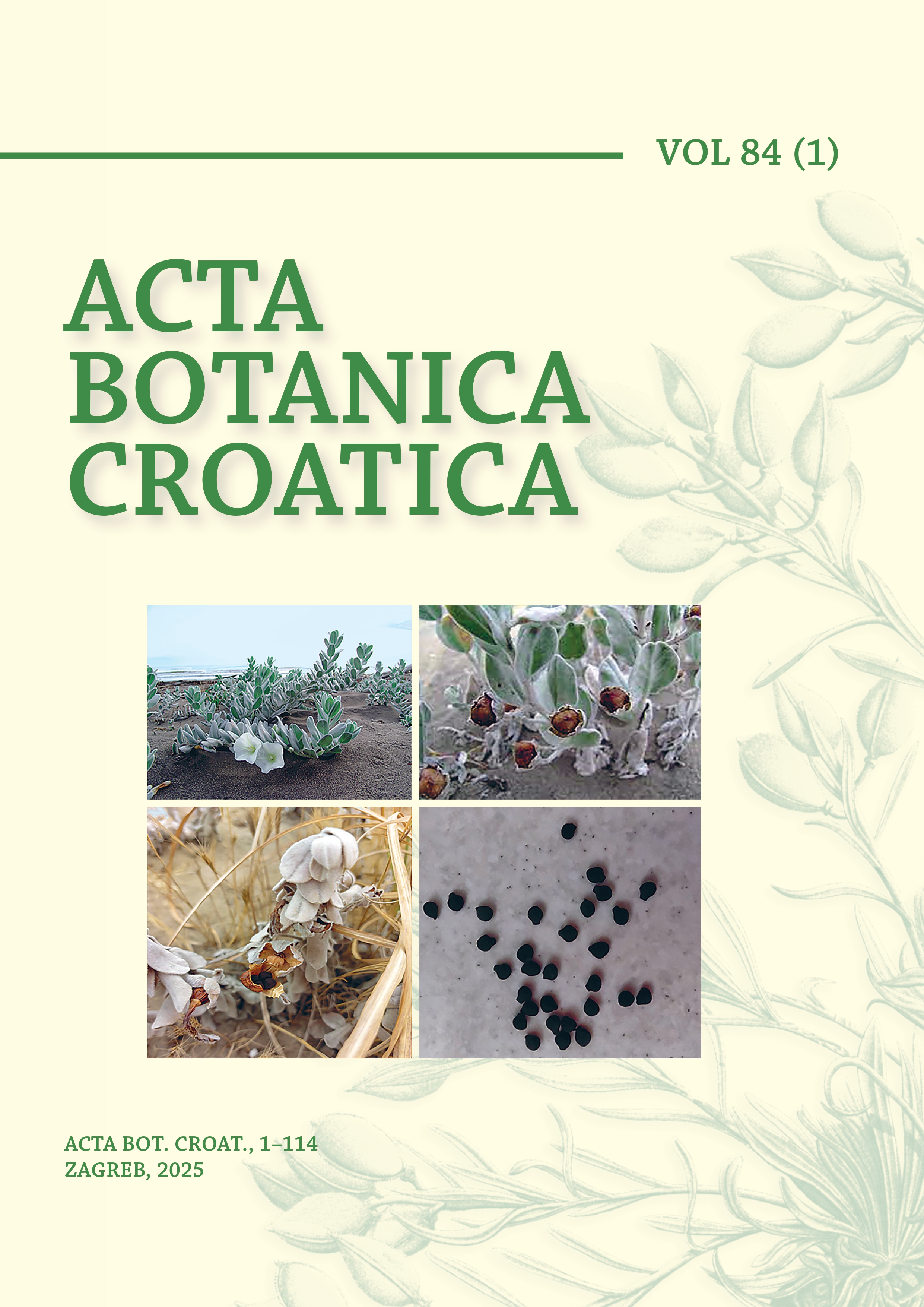
Convolvulus persicus L. is an endemic endangered species distributed in the coastal regions of the Caspian Sea and the Black Sea that displays limited germination, potentially impacting its ability to regenerate. To gain an understanding of the dormancy status and germination needs of C. persicus, seed characteristics, seed coat permeability and different dormancy-breaking treatments were assessed. The results revealed that C. persicus seed coats are water-impermeable and that both cold and warm stratification were effective in breaking dormancy. Furthermore, GA3 pretreatment with combination of either cold or warm stratification proved successful in releasing dormancy. However, the highest germination percentage and rate as well as seed vigour was achieved by mechanical scarification followed by H2SO4 application and warm stratification. Warm stratification was recognized to be more favourable for overcoming seed dormancy and promoting seedling survival than cold stratification. Notably, the influence of population type on germination capacity was found to be negligible. These findings may facilitate the conservation and collection management of this threatened plant species, which is currently underrepresented in ex situ conservation efforts.
Keywords
Article Details
Copyright (c) 2024 Sedigheh Kelij, Razieh Bahadornejad Velashedi, Naser Jafari

This work is licensed under a Creative Commons Attribution 4.0 International License.
Acta Botanica Croatica is an Open Access journal with minimal restrictions regarding content reuse. Immediately after publishing, all content becomes freely available to anyone for unlimited use and distribution, under the sole condition that the author(s) and the original source are properly attributed according to the Creative Commons Attribution 4.0 International License (CC BY 4.0).
CC BY 4.0 represents the highest level of Open Access, which maximizes dissemination of scholarly work and protects the rights of its authors. In Acta Botanica Croatica, authors hold the copyright of their work and retain unrestricted publishing rights.
By approving final Proof the authors grant to the publisher exclusive license to publish their article in print and on-line, in accordance with the Creative Commons Attribution (CC-BY-4.0) license.